
UNDERSTAND • PREPARE • APPROACH WITH CONFIDENCE
Police Psychological Assessment Preparation in Canada
Understand what to expect during the psychological assessment stage used by Canadian law-enforcement agencies. Prepare ethically for the written components and psychologist interview with greater clarity, self-awareness and confidence.
- Understand the Assessment Process
- Prepare for the Psychologist Interview
- Build Self-Awareness and Clarity
- Ethical, Agency-Specific Guidance
- Municipal Police
- CBSA
- RCMP
- OPP
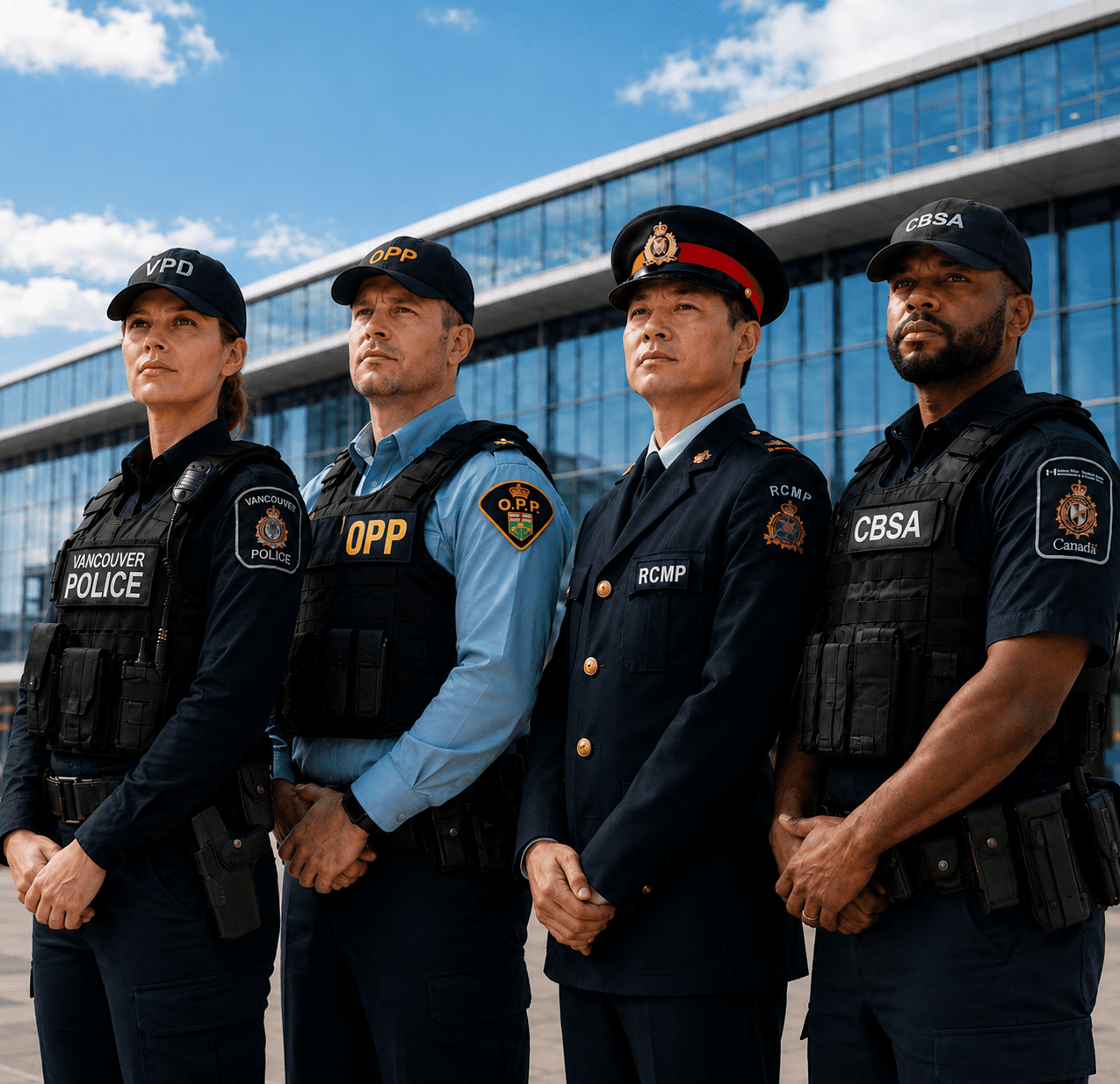
- National Team of Former Police, RCMP, CBSA Officers, Recruiters & HR Specialists
- 100% Canadian Owned and Operated
Understanding the Police Psychological Assessment Process
Police psychological assessments are used by Canadian law-enforcement agencies to help evaluate an applicant’s suitability for the demands and responsibilities of public-safety work. The exact process varies by agency, but it may include standardized written measures, background information and an interview conducted by a qualified psychologist. This is not an academic exam, and there are no answers to memorize. Ethical preparation helps you understand the process, reflect honestly on your experiences and approach the assessment with greater clarity, consistency and self-awareness.
What a Police Psychological Assessment May Include
1
Written Psychological Measures
Standardized questionnaires or personality inventories may be used to identify patterns across your responses. These are not knowledge tests and should be completed honestly without trying to determine a preferred answer.
2
Personal and Occupational History
You may be asked about relevant life experiences, employment history, decision-making, relationships, stress management and previous challenges. Clear and accurate disclosure is important throughout the process.
3
Psychologist Interview
A psychologist may discuss your history, clarify written responses and explore how you have handled different experiences. The purpose is professional evaluation—not testing rehearsed interview answers.
What Ethical Psychological Assessment Preparation Can—and Cannot—Do
Preparation should reduce uncertainty and improve understanding—not influence or circumvent an independent psychological evaluation. anEDGE provides educational guidance on the hiring process and does not provide clinical psychological services.
Ethical Preparation Can Help You:
Understand the purpose and general structure of the assessment
Reflect honestly on relevant work and life experiences
Communicate your history clearly and accurately
Reduce unnecessary uncertainty and overthinking
Approach the process with professionalism and self-awareness
Ethical Preparation Cannot:
Provide protected test questions or answer keys
Teach “preferred” responses or methods of manipulating results
Change your psychological profile
Predict or guarantee an agency’s decision
Diagnose, treat or replace the work of a qualified psychologist
Our preparation respects the independence and integrity of the official assessment process. Applicants are always encouraged to respond honestly and follow the instructions provided by the hiring agency and evaluating psychologist.
Choose Your Agency-Specific Psychological Assessment Preparation
The core principles of ethical preparation are similar, but terminology, assessment stages and published requirements can vary by agency. Select your agency for more relevant information about its hiring process and preparation options.
RCMP Psychological Assessment
Preparation for applicants approaching the RCMP psychological assessment stage, focused on process awareness, honest self-reflection and clear communication.
CBSA Psychological Assessment
Understand where psychological screening occurs in the CBSA selection process and how to approach its written and interview components professionally.
OPP Psychological Assessment
Guidance for applicants preparing for the psychological-assessment stage of the Ontario Provincial Police hiring process.
Municipal Police Services
Preparation for applicants to municipal police services across Canada. Exact requirements vary, so candidates should always confirm the process with their recruiting service.
Why Canadian Law-Enforcement Applicants Choose anEDGE
Psychological assessment preparation requires professional judgment, discretion and an ethical approach. anEDGE provides individualized guidance from experienced public-safety hiring professionals while respecting the independence and integrity of the official assessment process.
Experienced Law-Enforcement and Hiring Professionals
Work with professionals who understand Canadian law-enforcement recruitment, public-safety hiring processes and the responsibilities applicants are preparing to assume.
Individual, Agency-Relevant Guidance
Every applicant brings different work, life and recruitment experiences. Preparation is tailored to your agency, current hiring stage and individual circumstances rather than delivered through generic scripts.
Ethical Preparation—Without Test Answers
Our preparation focuses on process awareness, honest self-reflection, clear communication and professional readiness. We do not provide protected questions, answer keys or methods of manipulating assessment results.
Individual One-on-One Support
Discuss your circumstances and questions in a focused professional setting. One-on-one preparation allows the guidance to remain relevant to your background, concerns and stage of the hiring process.
Police Psych Test Questions: What Applicants Should Understand
Applicants often search for police psychological test questions to understand what they may encounter during the assessment. However, a psychological assessment is not a conventional knowledge exam with answers that can be memorized. The format varies by agency and evaluating psychologist, but applicants may encounter standardized written measures, questions about relevant personal and occupational history, and requests to clarify previous experiences or responses.
Are the Questions the Same for Every Applicant?
No. The assessment process can vary depending on the agency, position, assessment provider and information being reviewed. Some applicants may be asked follow-up questions based on their written responses, personal history or circumstances.
Is There a “Correct” Answer?
Personality and suitability measures generally do not have a conventional answer key to study. Attempting to identify or provide a preferred response can create inconsistencies. Applicants should read each item carefully and respond honestly.
Can You Prepare for the Questions?
You can prepare by understanding the general process, reviewing your personal and occupational history, and becoming comfortable discussing relevant experiences clearly and accurately. Preparation should improve your readiness—not teach you how to manipulate an assessment result.
anEDGE does not publish protected psychological test questions or provide scripted answers. Our preparation focuses on process awareness, honest self-reflection, clear communication and professional readiness.
What to Expect During a Police Psychological Interview
Depending on the agency and assessment process, applicants may participate in an interview conducted by a qualified psychologist. This professional discussion may be used to review relevant background information, clarify written assessment responses and better understand the applicant’s experiences and suitability for public-safety work. The exact format and areas discussed will vary. Applicants should not expect every agency, psychologist or interview to follow an identical process.
Review of Assessment Information
The psychologist may review information collected during earlier stages of the assessment, including written psychological measures, questionnaires, or personal history information. Applicants may be asked to explain or clarify particular responses.
Personal and Occupational History
The discussion may cover relevant employment, education, relationships, decision-making, stress management and significant life experiences. The psychologist may explore how an applicant has responded to challenges and what was learned from those experiences.
Clarification and Follow-Up Questions
Follow-up questions allow the psychologist to gather context and better understand an applicant’s responses. Being asked for clarification does not automatically mean that an answer was wrong or that a negative decision has been made.
How Should Applicants Approach the Interview?
Listen carefully, answer questions in your own words and ask for clarification when something is unclear. Applicants should communicate honestly and accurately rather than attempting to appear perfect or deliver rehearsed responses. It can be helpful to review your personal and occupational history beforehand so that important dates, experiences and circumstances can be discussed clearly and consistently.
anEDGE helps applicants understand the general interview process and approach it with greater clarity and professionalism. We do not provide protected questions, scripted answers, psychological diagnoses or guarantees regarding assessment outcomes.
Approaching the Psychological Assessment Stage?
Speak with our team about your agency, current hiring stage and whether individualized preparation is appropriate for your situation.
Professional Disclaimer
Our coaching services are only educational and preparatory in nature. They are not clinical services and do not constitute psychological assessment, diagnosis, treatment, or licensed psychological care. We do not provide shortcuts, test answers, or methods to bypass, manipulate, or “trick” any psychological assessment. All official psychological assessments are conducted independently by licensed psychologists appointed by the hiring agency. Our preparation is grounded in real police and hiring-process experience and professional standards, and is intended solely to help candidates understand the assessment process and prepare ethically and confidently.
Trusted by Canadian Police Applicants Nationwide
14 May, 2026
Amazing Experience- Interview Prep
Amazing experience, tailored the prep to what I needed. Extremely happy with the end result and I recommend their serivces. They will help you get the edge you need.
Andy
Ontario
1st July, 2026
ETHOS & Interview coaching has been amazing!
I’ve subscribed for the ETHOS course and the interview coaching, and it has been really helpful. I’ve scored in the mid 80s for ETHOS with the help of anEdge ETHOS course.
As for my interview, my coach, Tyra, has been amazing with the direction for my interview, and with her help, I’ve been gaining so much confidence. My interview will be scheduled soon and I’m already feeling close to being prepared.
Luke J
Vancouver
8th July , 2026
The best decision I’ve made is to…
The best decision I’ve made is to consult AnEdge, Kevin is awesome, so as his team and use this for all hiring steps and did not miss one. I am delighted for their existence!
Mimi
Ontario
25th June, 2025
Exactly the Confidence Boost I Needed
I had a great experience working with anEDGE to prepare for my CBSA interview. I reached out on pretty short notice before my interview, but Paul was flexible with his schedule and made it work, which I really appreciated.
The coaching was personalized, and instead of just giving me answers to memorize, Paul helped me understand how to structure my responses and think through the interview questions. I walked into my interview feeling confident and prepared. I’d definitely recommend anEDGE to anyone getting ready for a law enforcement interview.
Stathi P
Edmonton
15th June, 2026
Interview coaching and practice
The interview coaching and practice that anEDGE provides is extremely helpful. I had the pleasure of having a 1.5-hour session with Paul, and he was extremely helpful in preparing me for what to expect on my upcoming CBSA interview. The amount of information received is phenomenal, and I would highly recommend these coaching methods to anyone who has a serious interest in law enforcement. The price is more than fair with the amount of information that is given. Overall, anEDGE is an extremely caring company that strives for its clients’ success.
Taylor S
Ontario
3rd June 2026
I took a 3-session package
I took 3 session package. 2 coaching sessions and 1 full mock interview. I was preparing for edmonton police BDI interview. I found these coaching sessions really helpful, and passed my interview. I was told to focus on few things by my mentor from anedge. Thats exactly what was asked in the interview.
Gagan S
Ontario
18 Feb, 2026
Excellent experience with anEDGE
Excellent experience with anEDGE! I highly recommend this team to anyone preparing for professional exams. Thanks to their well-structured practice tests and the support provided through email exchanges, I successfully passed both of my exams within just two weeks: the Correctional Service exam and the Border Services exam. A huge thank you to the entire team for their professionalism and responsiveness. Special thanks to Mr. Kevin and Ms. Shana for their prompt replies, support, and professionalism. Your help truly contributed to my success. Thank you so much!
Herve
Ontario
20 Jun, 2026
Thank you anEDGE
Thank you so much Kevin, Elaine and the whole organization of anEDGE for helping me to pass the RCMP Suitability interview.
Elaine is an exceptional tutor. I learned exactly how to structure my answers using the STAR method. The practice questions perfectly mirrored the actual RCMP competency based behavioral and situational format. The feedback was honest, direct and highlighted even the small errors in my answers which I never would have noticed. Also, the mock interview really helped me to eliminate all my anxiety before the actual interview. I highly recommend anEDGE to anyone aspiring to a career in law enforcement.
AS
Winnipeg
Frequently Asked Questions
What is a police psychological assessment?
A police psychological assessment is an employment-suitability evaluation used to help determine whether an applicant currently possesses the psychological attributes required for public-safety work. It is conducted independently by a qualified psychologist or authorized assessment provider.
What does a police psychological assessment include?
The process varies by agency but may include standardized written measures, personal-history questionnaires, a psychologist interview and a review of relevant background information. Follow the instructions provided by your hiring agency because not every assessment follows the same format.
What questions are asked on a police psychological test?
Applicants may be asked questions about their personal and occupational history, behaviour, judgment, relationships, stress management, and previous experiences. Exact questions and assessment materials are protected and should not be obtained or rehearsed in advance.
How should I prepare for a police psychological assessment?
Ethical preparation involves understanding the general process, reviewing your personal and occupational history and being ready to discuss relevant experiences clearly and accurately. Follow your agency’s instructions and avoid attempting to memorize preferred answers.
Can you study for a police psychological test?
You cannot study for it like a conventional knowledge exam. However, you can prepare by reducing uncertainty, organizing important background information and becoming comfortable communicating honestly about your experiences.
Is the police psychological assessment pass or fail?
This depends on the agency and stage of recruitment. Some processes provide a pass-or-fail determination, while certain preliminary personality assessments—such as those included in the OACP Certificate process—do not yield a pass-or-fail result.
What can disqualify you from a police psychological assessment?
There is no universal public list of automatic disqualifiers. Psychologists and hiring agencies consider the applicant’s overall information, current functioning and job requirements. Significant omissions, inaccuracies or inconsistencies can also affect an application, which is why complete and honest disclosure is important.
Does a mental-health history automatically disqualify a police applicant?
Not necessarily. A previous psychological condition, counselling history or period of difficulty does not automatically determine the outcome. The psychologist may consider the nature of the concern, current functioning, stability over time and any supporting documentation requested by the agency.
What happens during the police psychological interview?
The psychologist may review your assessment information, discuss relevant personal and occupational history and ask follow-up questions for clarification. Applicants should listen carefully, respond in their own words and avoid attempting to appear perfect or deliver rehearsed answers.
What is the MMPI, and is it used in police psychological testing?
The MMPI is a standardized psychological assessment instrument used to evaluate psychological characteristics and response patterns. Some public-safety selection processes use the MMPI or other standardized measures, but the specific instruments can vary by agency and may change over time.
Are RCMP, CBSA, OPP and municipal police psychological assessments the same?
No. Each organization establishes its own selection requirements. The RCMP uses a Psychological Suitability Screening process, the CBSA assessment includes written components and a psychologist interview, and provincial or municipal police services may use different providers and procedures.
How long does a police psychological assessment take?
The length varies according to the agency, assessment provider and required components. Written measures may take several hours, and the psychologist interview may occur during a separate appointment. Applicants should rely on the scheduling information provided in their official invitation.
Will I receive my psychological test scores or a detailed report?
Not always. Some agencies provide applicants only with an overall suitability determination and do not release test scores, reports or detailed feedback. The consent documents supplied before your assessment should explain how results will be handled.
What happens if I am found psychologically unsuitable? Can I reapply?
The consequences and reapplication rules are determined by the hiring agency. An applicant may be deferred, removed from the current process or required to wait before reapplying. Follow the written decision and contact the appropriate recruiter if the reapplication terms are unclear.