
Correctional Officer Situational Judgement Test Practice (Canada)
- Realistic Situational Judgement Test Scenarios for Correctional Officer Candidates
- Updated for the 2026 Corrections Canada (CSC) Recruitment Process
- Full Situational Judgement Practice Tests & Scenario-Based Questions
$79
3 Month Access Extendable if needed
Backed by Our 100% Money-Back Guarantee
Rated ★★★★★on Trustpilot by Canadian Law-Enforcement Applicants
What Is the Correctional Officer Situational Judgement Test
The Correctional Officer Situational Judgement Test practice test (SJT) is an assessment commonly used in the Corrections Canada (CSC) hiring process to evaluate how candidates respond to realistic workplace situations inside correctional institutions.
Rather than testing memorization or academic knowledge, the situational judgement test focuses on decision-making, communication, and professional judgment. Candidates are presented with realistic correctional scenarios and asked to determine the most appropriate response based on safety, professionalism, and institutional procedures.
Situational judgement questions typically involve situations that correctional officers may face during daily operations, including interactions with inmates, conflict resolution, teamwork with colleagues, and maintaining safety within the institution.
This type of assessment helps corrections agencies determine whether applicants have the judgment, reasoning ability, and professional decision-making skills required to work effectively in a correctional environment.
For many applicants, situational judgement testing can be unfamiliar and challenging without preparation. Practicing realistic scenarios helps candidates understand how questions are structured and how to approach decision-making under pressure.
If you are preparing for the full hiring process, explore our Corrections Canada Exam Prep practice tests and preparation resources.
Our Correctional Officer Situational Judgement Test practice exams are designed to mirror the structure, difficulty, and scenario-based decision-making used in real corrections hiring assessments across Canada.
Correctional Officer Situational Judgement Test Practice & Realistic CSC Scenario Simulations
Prepare confidently for the Correctional Officer Situational Judgement Test used in the Corrections Canada (CSC) hiring process with expert-designed practice tests and realistic scenario simulations.
anEDGE provides a structured preparation experience designed to reflect the decision-making, judgment, and situational awareness that corrections agencies expect from correctional officer candidates during the hiring process.
Our situational judgement practice tests present realistic workplace scenarios similar to those used in corrections hiring assessments. Candidates must evaluate each situation, consider safety and institutional procedures, and select the most appropriate response based on professional judgment.
These assessments measure how applicants interpret information, prioritize safety, communicate effectively, and apply ethical decision-making in challenging correctional environments.
Our preparation materials are developed by former law enforcement and public safety professionals who understand the expectations placed on candidates entering Canada’s federal correctional system.
- Realistic Situational Judgement Test scenarios for correctional officer candidates
- Updated for the current Corrections Canada (CSC) recruitment process
- Full SJT practice tests and scenario-based decision-making questions
- Built by Canada’s leading law-enforcement & corrections coaching team
- Fast, easy access — begin practicing today
Example Correctional Officer Situational Judgement Test Questions
Situational Judgement Tests (SJTs) used in correctional officer hiring present realistic workplace scenarios and ask candidates to choose the most appropriate response. These questions evaluate decision-making, professionalism, safety awareness, and communication skills.
Below are examples similar to the types of scenarios candidates may encounter during the Corrections Canada hiring process.
Scenario 1
You are supervising a housing unit when two inmates begin arguing loudly. One inmate appears increasingly aggressive, and other inmates nearby are starting to watch the confrontation.
What should you do FIRST?
A. Immediately physically intervene to separate the inmates
B. Call for assistance and give clear verbal commands for the inmates to stop
C. Ignore the argument unless it becomes physical
D. Remove the aggressive inmate from the unit without backup
Best Response
B — Call for assistance and give clear verbal commands.
Correctional officers must prioritize institutional safety and de-escalation. Requesting assistance while issuing clear commands helps control the situation safely and in accordance with proper correctional procedures.
Scenario 2
During a routine count, an inmate approaches you privately and claims another inmate is being threatened but asks you not to report it because they fear retaliation.
What is the most appropriate response?
A. Promise to keep the information confidential and take no further action
B. Report the concern through proper institutional channels
C. Confront the accused inmate immediately
D. Ignore the report because it may not be accurate
Best Response
B — Report the concern through proper channels.
Correctional officers are responsible for maintaining institutional safety and security. Even if information is sensitive, it must be reported so staff can assess the risk and take appropriate action.
Scenario 3
While escorting inmates to a program area, one inmate refuses to follow instructions and begins questioning your authority in front of others.
What is the most appropriate action?
A. Argue with the inmate to assert authority
B. Remain calm, repeat the instruction clearly, and follow institutional procedures
C. Immediately place the inmate in segregation
D. Ignore the behaviour to avoid confrontation
Best Response
B — Remain calm, repeat the instruction clearly, and follow procedures.
Professional correctional officers must maintain control, professionalism, and consistency when dealing with challenging behaviour.
Situational judgment tests measure how well candidates apply professional judgment, communication skills, and safety awareness when responding to realistic correctional scenarios.
Practicing these types of questions helps applicants understand how correctional officers are expected to think and respond during the Corrections Canada hiring process.
For candidates preparing for the assessment, practicing realistic scenarios can significantly improve confidence and decision-making during the test.
Everything You Get in Our Correctional Officer Situational Judgement Test Practice
 Full-Length Situational Judgement Test Simulations
Practice with realistic correctional officer scenarios similar to those used in the CSC hiring process.
Timed Decision-Making Assessments
Develop the ability to quickly evaluate situations and choose the most appropriate response under pressure.
Realistic Correctional Workplace Scenarios
Work through situations involving inmate management, communication, teamwork, and professional judgment.
Detailed Answer Explanations
Understand why certain responses are more effective so you can improve your decision-making.
Instant Scoring & Feedback
Identify strengths and areas for improvement after every practice test.
Unlimited Attempts (90 Days Access)
Retake situational judgement tests as often as needed to build confidence and consistency.
Access on Any Device
Practice anytime from your phone, tablet, or computer.
Why the Situational Judgement Test Matters in the CSC Hiring Process
Applicants seeking to become correctional officers with the Correctional Service of Canada (CSC) must demonstrate strong judgment, professionalism, and decision-making ability throughout the hiring process.
Situational Judgement Tests are designed to measure how candidates respond to realistic workplace situations, particularly those involving safety, communication, conflict management, and ethical decision-making.
These assessments evaluate the core skills CSC looks for in correctional officer candidates:
• Sound judgment and ethical decision-making
• Situational awareness and problem-solving
• Reading comprehension and information interpretation
• Professional communication
• Decision-making under pressure
These competencies are essential for correctional officers working in high-responsibility environments where safety, professionalism, and sound judgment are critical.
Many applicants underestimate this type of testing because it focuses less on memorization and more on how candidates think, evaluate situations, and apply professional judgment.
Practicing realistic situational judgement scenarios can help candidates better understand what correctional services expect during the hiring process.
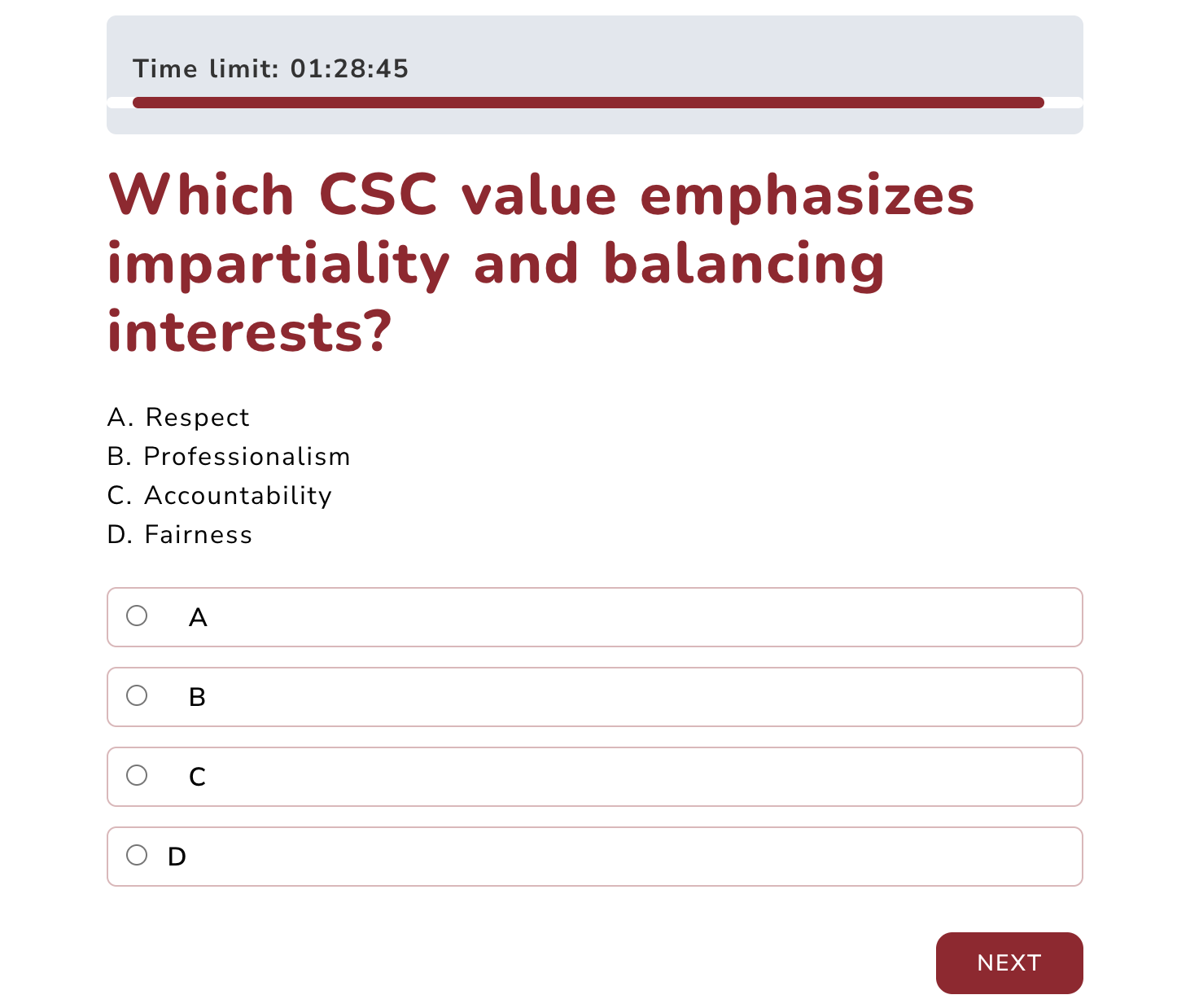
Why anEDGE Is Trusted for Correctional Officer Situational Judgement Test Preparation
Built by Experienced Public Safety Professionals
Our practice tests are developed by former law enforcement and public safety professionals who understand the standards required for correctional officer candidates.
Aligned With the CSC Hiring Process
Our scenarios reflect the judgment, professionalism, and decision-making competencies evaluated during the Corrections Canada hiring process.
Realistic Situational Judgement Test Scenarios
Practice with correctional-style scenarios that test decision-making, communication, ethics, and situational awareness.
Trusted by Thousands of Canadian Applicants
anEDGE has helped thousands of Canadians prepare for careers in corrections, policing, and border services.
Unlimited Practice for 90 Days
Retake situational judgement practice tests as often as needed to build confidence and improve performance.
$79 for 90-Day Access
One payment. No subscriptions.
Immediate access to all 2026 Corrections SJT exam practice material
1
Written Communication Assessment
The written component measures your ability to communicate clearly and professionally in a correctional workplace environment.
Candidates must demonstrate:
• Grammar accuracy
• Sentence structure
• Vocabulary use
• Spelling and clarity
• Professionally written responses
Strong writing skills are important for preparing incident reports, documentation, and institutional records used within correctional services.
2
Situational Judgement Scenarios SJT
These scenario-based questions evaluate how you respond to realistic workplace situations involving:
• Ethics
• Professionalism
• Fairness
• Communication
• De-escalation
• Conflict resolution
This section evaluates whether candidates demonstrate the judgment, professionalism, and decision-making skills expected of correctional officers working in Canadian federal institutions.
Start Your 2026 Corrections Canada Preparation Today
Train with the most realistic, accurate, and trusted Corrections Canada SJT practice tests and exams
If you want to pass, prepare adequately. You can then move on to our Corrections interview coaching and finally our Corrections psychological assessment prep
Frequently Asked Questions
What is the Correctional Officer Situational Judgement Test?
The Correctional Officer Situational Judgement Test evaluates how candidates respond to realistic workplace situations that correctional officers may face. The assessment measures decision-making, professionalism, communication, and the ability to apply sound judgment in correctional environments.
Is the Situational Judgement Test part of the Corrections Canada hiring process?
Yes. Situational judgement style assessments are commonly used during the Corrections Canada hiring process to evaluate whether applicants demonstrate the professional judgment and reasoning skills required for correctional officer roles.
What skills does the correctional officer situational judgement test measure?
Situational judgement tests typically evaluate:
• Professional decision-making
• Ethical judgment
• Situational awareness
• Communication skills
• Conflict management
• Problem-solving under pressure
These competencies are essential for working safely and effectively in correctional institutions.
How difficult is the correctional officer entrance exam?
Many applicants find the correctional officer entrance exam challenging because it focuses on judgment and decision-making rather than memorized knowledge. Candidates must evaluate realistic scenarios and select the most appropriate professional response.
How can I prepare for the correctional officer situational judgement test?
The best way to prepare is by practicing realistic situational judgement scenarios. Practicing helps candidates understand how correctional services expect officers to evaluate risks, communicate professionally, and respond to workplace situations.
What types of scenarios appear on situational judgement tests?
Situational judgement tests often include scenarios involving:
• inmate conflict or safety concerns
• communication with colleagues or supervisors
• ethical decision-making situations
• workplace professionalism
• responding to stressful or unpredictable events
Candidates must choose the response that best reflects professional correctional officer behavior.
Do correctional officer tests require memorization?
No. Most correctional officer situational judgement assessments focus on reasoning and decision-making rather than memorized information. Candidates must evaluate scenarios and choose the most appropriate response.
How long is the correctional officer entrance test?
The length of the test can vary depending on the hiring process and assessment format. Situational judgement assessments typically include multiple scenarios that must be evaluated within a timed testing session.
How long is the correctional officer entrance test?
The length of the test can vary depending on the hiring process and assessment format. Situational judgement assessments typically include multiple scenarios that must be evaluated within a timed testing session.
Can you retake the correctional officer entrance exam?
Policies for retaking correctional officer assessments depend on the hiring agency. In some cases, candidates may need to wait a certain period before reapplying or attempting the assessment again.
What is the best strategy for answering situational judgement questions?
When answering situational judgement questions, candidates should focus on responses that demonstrate:
• professionalism
• safety awareness
• ethical decision-making
• respect for procedures
• effective communication
The most appropriate answers usually prioritize safety, policy compliance, and de-escalation.
What is the best strategy for answering situational judgement questions?
When answering situational judgement questions, candidates should focus on responses that demonstrate:
• professionalism
• safety awareness
• ethical decision-making
• respect for procedures
• effective communication
The most appropriate answers usually prioritize safety, policy compliance, and de-escalation.
What happens if you fail the correctional officer entrance exam?
If an applicant does not pass the entrance exam, they may be required to wait before applying again. Requirements vary depending on the correctional service and recruitment policies.
Are situational judgement tests multiple choice?
Yes. Most situational judgement tests present a scenario followed by multiple possible responses. Candidates must select the option that best reflects professional correctional officer judgment.